



Compare and contrast the symbolic approaches of Clifford Geertz and Victor Turner to understand culture -[15 Marks- UPSC 2025]
Introduction
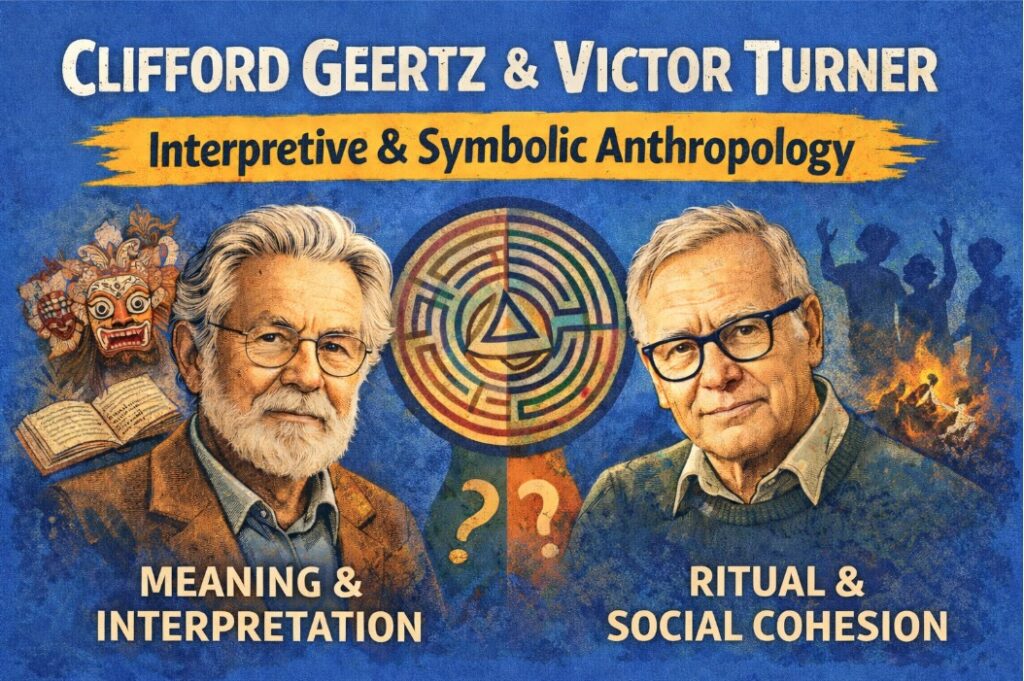
Clifford Geertz and Victor Turner are two central figures in symbolic and interpretive anthropology. Both emphasized the importance of symbols in understanding culture, yet they approached symbols from different intellectual traditions and analytical concerns. While Geertz focused on meaning and interpretation, Turner emphasized social process and ritual action. Their approaches are distinct but complementary in explaining how culture operates.
Body
Clifford Geertz’s Interpretive Approach
Clifford Geertz viewed culture as a coherent system of symbols and meanings. He argued that culture is not merely a set of customs or practices but a “web of significance” through which people interpret their world and organize their lives. For Geertz, anthropology was essentially an interpretive endeavor aimed at understanding these meanings rather than explaining culture through laws or functions.
His key methodological contribution was the concept of thick description, which involves uncovering the multiple layers of meaning embedded in cultural acts such as rituals, myths, and everyday behavior. These acts must be interpreted within the broader symbolic framework of a society. Geertz treated culture as a text to be read and interpreted, focusing on ideas, meanings, and human experience. His approach reflects a distinctly American anthropological orientation, emphasizing interpretation and the understanding of cultural systems from the actor’s point of view.
Victor Turner’s Processual and Ritual Approach
Victor Turner, influenced by British social anthropology and structural-functionalism, approached symbols through their role in social life rather than as part of an entire symbolic system. His primary concern was how symbols function within rituals to mediate social tensions, maintain cohesion, and facilitate change. Based on his ethnographic work among the Ndembu of Zambia, Turner demonstrated that rituals are dynamic social processes rather than static symbolic expressions.
A central concept in Turner’s analysis is communitas, a form of egalitarian togetherness that emerges during the liminal stages of rituals, when normal social hierarchies are temporarily suspended. For Turner, symbols are not merely expressive of meaning; they are performative forces that actively shape relationships, guide collective experiences, and sustain society, particularly during periods of change and crisis.
Conclusion
In comparison, Geertz emphasized culture as meaning and interpretation, treating symbols as texts to be understood, while Turner focused on symbols as active forces within ritual and social processes. Together, their contrasting yet complementary perspectives defined the two dominant trends in symbolic anthropology: Geertz’s interpretive search for meaning and Turner’s focus on ritual, social cohesion, and transformation.